ServicesWhole-Home Filtration
Whole-Home Filtration in Zephyrhills
Our whole-home systems treat your water the moment it comes into the house, before it reaches the kitchen, the showers or the washing machine. We lay out what each option costs to install and what it costs to maintain, so the one you pick still makes sense years from now.
Filtered Water at Every Tap, Not Just the Kitchen
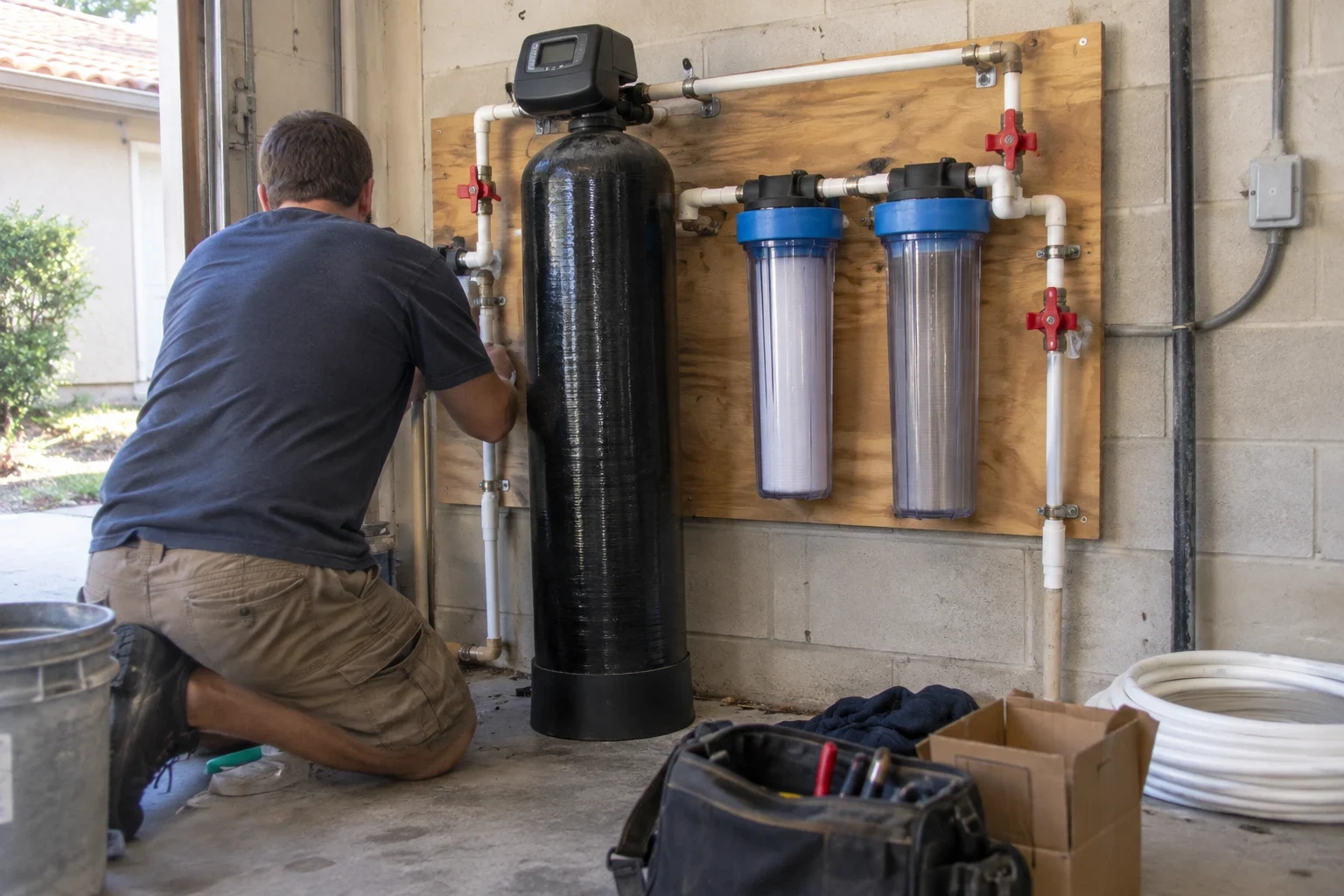
We connect the system to the pipe that feeds your whole house, most often in the garage or on the exterior wall where the supply comes through. Every drop runs through it first, so you notice better taste and less odor at the bathroom sink and in the shower, not only at a pitcher or the fridge dispenser. Most of our installs combine a sediment stage with a carbon tank that cuts chlorine, chloramine and the smells they leave behind.
Choosing comes down to two numbers. Some systems are cheaper to buy but need new cartridges every few months. Others cost more at the start but use a self-cleaning tank whose media lasts for years. We show you the purchase price and the upkeep together, so you can match the system to how long you expect to live in your home.
This is a good fit when the complaint follows you from room to room. If you mainly want better water to drink, a reverse osmosis unit under the kitchen sink may be the better use of your money, and we will say so.
What Your Installation Includes
- A look at your plumbing first
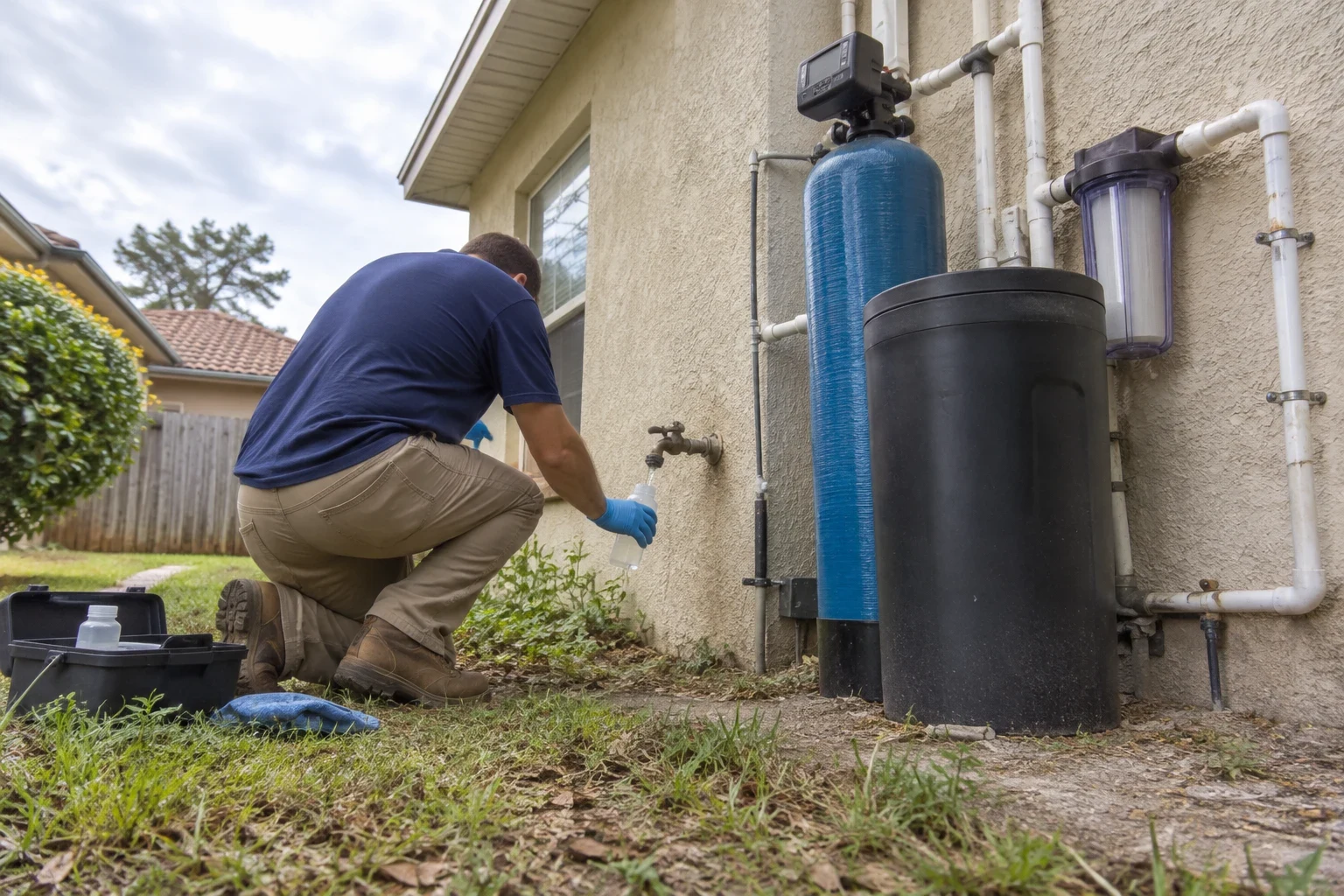
- We come to your home, locate the main supply line and note the pipe size, water pressure and available room. That tells us which systems fit and where they should go.
- Sediment prefilter
- The first stage traps sand, grit and flakes of rust. Keeping that debris out of the carbon tank helps the pricier media last longer.
- Carbon or catalytic carbon tank
- Regular carbon does a good job on chlorine. When a supply is disinfected with chloramine, we switch to catalytic carbon, since ordinary media struggles to break it down.
- Bypass valve
- We install a bypass so your home keeps getting water while the system is serviced. It turns easily by hand.
- Outdoor protection when needed
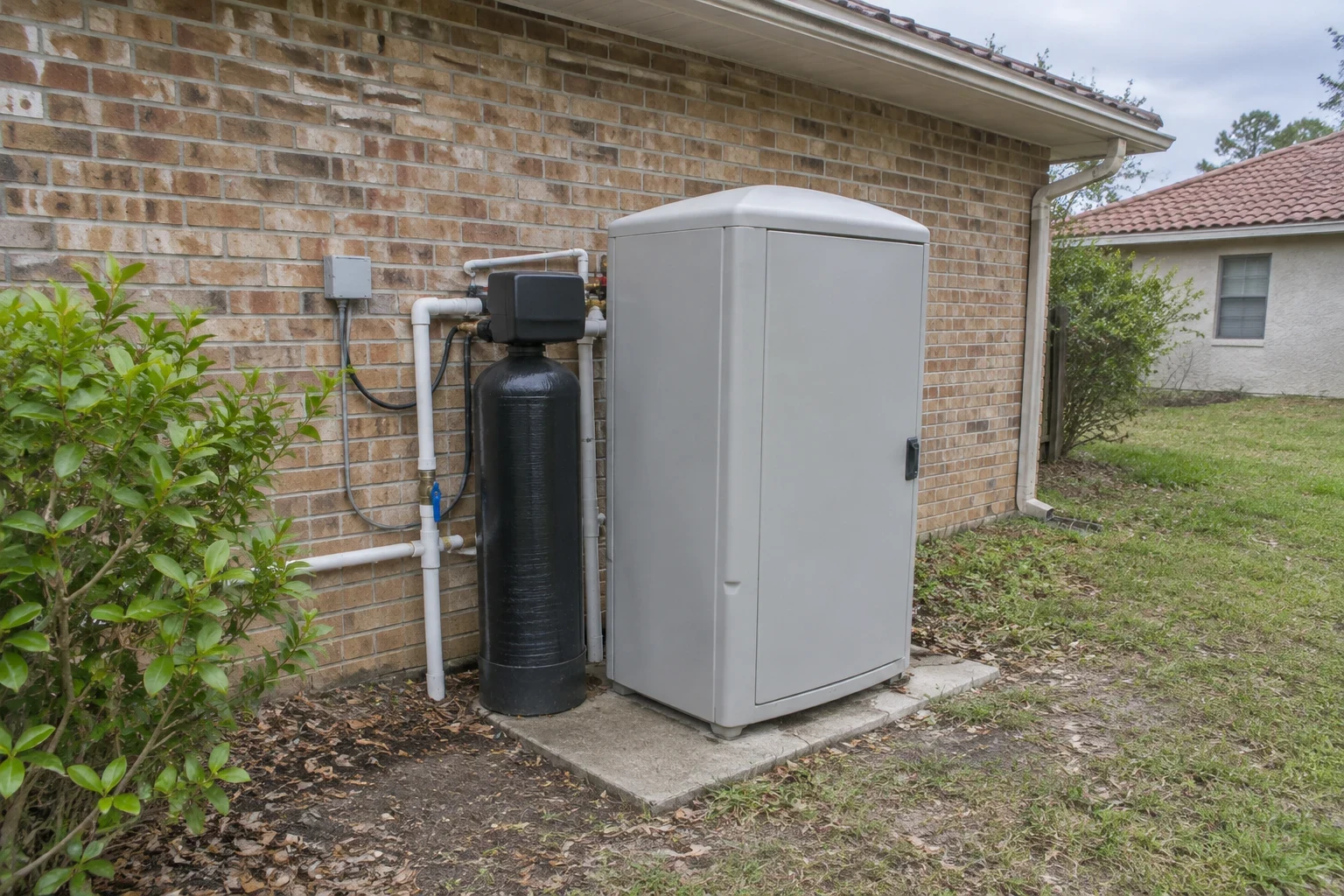
- Many Florida homes have the main line on an exterior wall. When yours does, we add a cover to shade the tanks and valve, which helps the plastic parts hold up.
- A walkthrough and an upkeep schedule
- Before we head out, we show you the valve, the filter housing and what to keep an eye on. You get a written schedule for prefilter changes and media replacement, plus our ongoing customer support for maintenance, filter replacements, and service needs.
Signs Whole-Home Filtration Makes Sense
Pool smell in the shower
A chlorine odor in hot, steamy water is common on treated city water. A carbon tank at the main line takes it out of every room at once.
Your fridge filter is the only good water
If you fill glasses at the refrigerator and avoid the faucet, a whole-home system lets you drink from any tap.
Dry skin and faded laundry
Many people notice their skin and hair feel less tight after chlorine is filtered out of shower water. Colors in the wash can hold up longer too.
Sediment in aerators and toilet tanks
Grit collecting in faucet screens or the bottom of a toilet tank means particles are moving through your pipes. A sediment stage stops them before they spread.
You are tired of buying cartridges
If you are changing several point-of-use filters around the house, one central system can cost less over time.
What Moves the Cost
Two systems that look alike on paper can end up far apart once you add five or ten years of upkeep. We price the installation and the ongoing care together, then explain the gap in plain terms. These are the factors that shift the number the most.
Cartridge system or backwashing tank
Cartridge housings are cheaper to put in but need fresh cartridges on a regular basis. A backwashing tank asks more at the start and much less afterward, so it often wins for families who plan to stay a while.
System size
The tank needs to keep pace with your heaviest stretch of use, such as two showers running while the washer fills. A bigger household or more bathrooms calls for a larger tank.
Type of carbon
Catalytic media, the kind made to break down chloramine, carries a higher price than regular carbon. If your supply uses plain chlorine, we stick with the standard media and skip the extra cost.
Where the line enters
An open garage wall makes for quick work. A cramped corner, an outdoor spot that needs a cover, or extra pipe to reach a good location adds labor and parts.
Added stages
Some homes also want a softener for scale or a separate drinking water unit. Each one brings its own equipment and upkeep, and we show you what it adds before you commit.
How Installation Day Goes
- 1
Start with a phone conversation
Describe what you notice in your water, like a smell, a taste or grit, and roughly how many people live in your home. Once we have a picture of your setup, we settle on a day for a visit that suits your schedule.
- 2
Home visit and written estimate
We look over the main line and the spot where the system would sit, then hand you a written estimate. It lists the system price beside the expected upkeep, so you see the full picture before you decide.
- 3
Install and flush
We shut off the water, tie the system and its bypass into the main line, and connect the tanks. Most homes are without water for a few hours. Then we flush the new media until the water runs clear.
- 4
Leak check, cleanup and handoff
We test every joint under pressure, tidy the work area and haul the packaging away. Last, we walk you through how the system works and leave the upkeep schedule with you.
Whole-Home Filtration Questions
Will a whole-home filter lower my water pressure?
Not if the system is matched to the flow your home actually uses. When people do notice weaker pressure, it usually traces back to a tank that is too small or a prefilter left in place long past its change date. We size the tank around your busiest stretch of water use and leave you a prefilter schedule so the flow stays steady.
How often does it need maintenance?
Plan on changing the sediment prefilter every few months, depending on how much grit your water carries. Carbon media in a backwashing tank lasts for years before it needs replacing. We write out the schedule for your specific system, and our ongoing customer support covers maintenance, filter replacements, and service needs.
Is this the same as a water softener?
No, they handle different problems. A filter goes after chlorine, odor and sediment, while a softener removes the calcium and magnesium that leave crusty deposits on faucets and inside your water heater. Some households want both, and our Water Softeners page explains how the two work side by side.
Do I still need a drinking water system?
Not always. For most people, carbon filtration on its own makes tap water taste noticeably better. If you want an extra layer for drinking and cooking, a reverse osmosis unit under the kitchen sink adds that without treating every gallon your home uses.
Can the system go outside?
Yes, when that is where your main line comes in. We set it on a level base and add a cover against sun and rain, which helps the tanks and control valve last.
I already have an old system. Can you just add to it?
Sometimes. We look at its age and condition, then give you a straight answer on whether repairing it or replacing it costs less over the years ahead. Our Water Softener & Filtration System Replacement page covers swapping out older equipment.
Pick a System You Will Still Be Happy With in Ten Years
Tell us about your water and your home, and we will walk you through the systems that fit, with the upkeep explained alongside the price. We work in Zephyrhills and nearby towns like Wesley Chapel and Dade City.