ServicesWell Water Treatment
Well Water Treatment in Zephyrhills
A sulfur odor in the shower, rust streaks in the toilet and grit in the faucet screens all have fixes. We build treatment around what your well is sending into your home, and we show what each option costs to run for years, not only on install day.
Treatment built around your well, not a catalog
Owning a well means no utility bill for water, and it also means no utility treating it for you. Whatever the pump pulls up goes straight to your faucets. Wells around Zephyrhills draw from limestone, so the water often brings along minerals, iron and sometimes hydrogen sulfide.
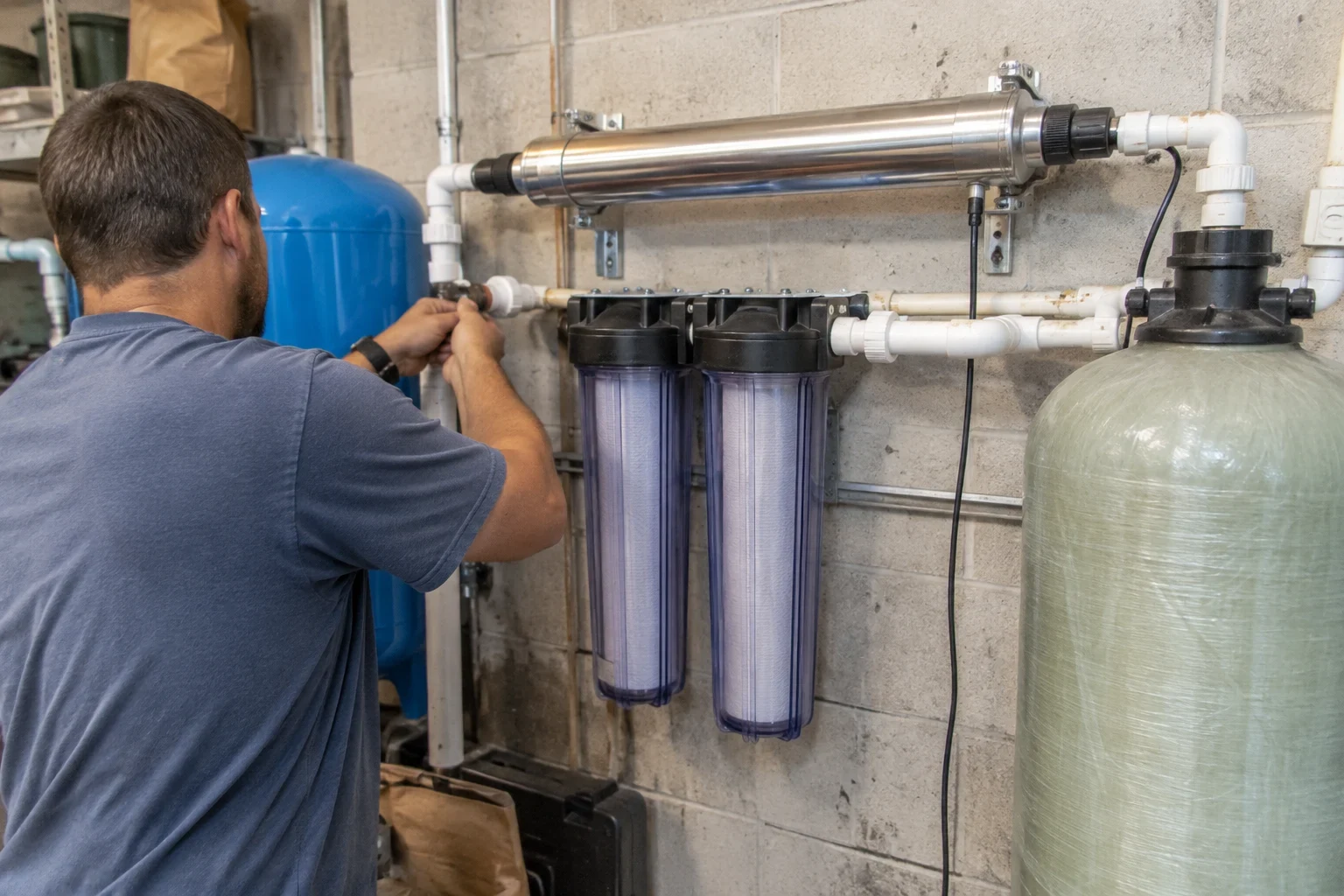
Well water treatment is the equipment installed between your pressure tank and the rest of your plumbing. One home may need only a filter for sand, while another needs iron and sulfur removal followed by softening. Getting the sequence right is as important as the parts themselves. Put a softener in front of an iron filter and the resin can clog early, which means paying for replacement years ahead of schedule.
We begin by hearing what you notice in your water, then we look over your well equipment and plumbing. After that you see every option next to each other: the equipment, the price to install it, the yearly upkeep and the expected lifespan. Now and then the budget unit is the smart pick. Other times it ends up costing more across a decade than the one with the higher price tag.
What our well water treatment covers
- Sulfur and odor removal
- Hydrogen sulfide causes that rotten-egg smell, and it is often worst on the hot side. Our sulfur filters oxidize it, hold it in the media and flush it to the drain on a set backwash cycle.
- Iron and manganese control
- Iron can be invisible in a fresh glass, then leave rust-colored marks once it meets air on porcelain and clothing. An iron filter turns it into particles the media can trap, so it never reaches your fixtures or water heater.
- Sediment filtration
- Sand pulled up by the pump grinds away at valves, faucet cartridges and appliance inlets. A sediment stage at the front catches it and protects every piece of equipment after it.
- Hardness treatment if you need it
- Some wells carry enough calcium and magnesium to coat glassware and the inside of the water heater. If yours does, we add one of our water softeners, sized to the number of people in your home.
- Better water at the kitchen tap
- Once the whole-home equipment handles the big problems, an under-sink reverse osmosis system can give you cleaner-tasting water for drinking and cooking.
Signs your well water needs treatment
Water that smells like eggs
A sulfur smell when you turn on the shower or fill a sink is the classic clue. It tends to be strongest first thing in the morning, after water has sat in the heater all night.
Rust-colored marks
Orange rings in the toilet, brown streaks below faucets and whites turning dingy in the wash usually mean iron. Bleach can lock those stains in rather than lift them.
Sand in the aerators
Faucet screens that keep clogging, or flow that slowly fades, show sediment is slipping through. Over time that grit wears down valves and appliance parts.
Scale and cloudy glasses
Crusty showerheads and spotted dishes point to hard water. The same mineral layer builds up quietly inside your water heater.
Equipment that has stopped keeping up
When odor or stains return even with a system in place, the media may be used up or the setup may no longer suit your water. Our water softener and filtration system replacement service handles that.
What to expect from first call to finished install
- 1
A conversation by phone
Let us know what you have noticed in your water, how many people share your home and which equipment is already in place. Plenty of questions get answered before anyone visits.
- 2
We visit and review the equipment
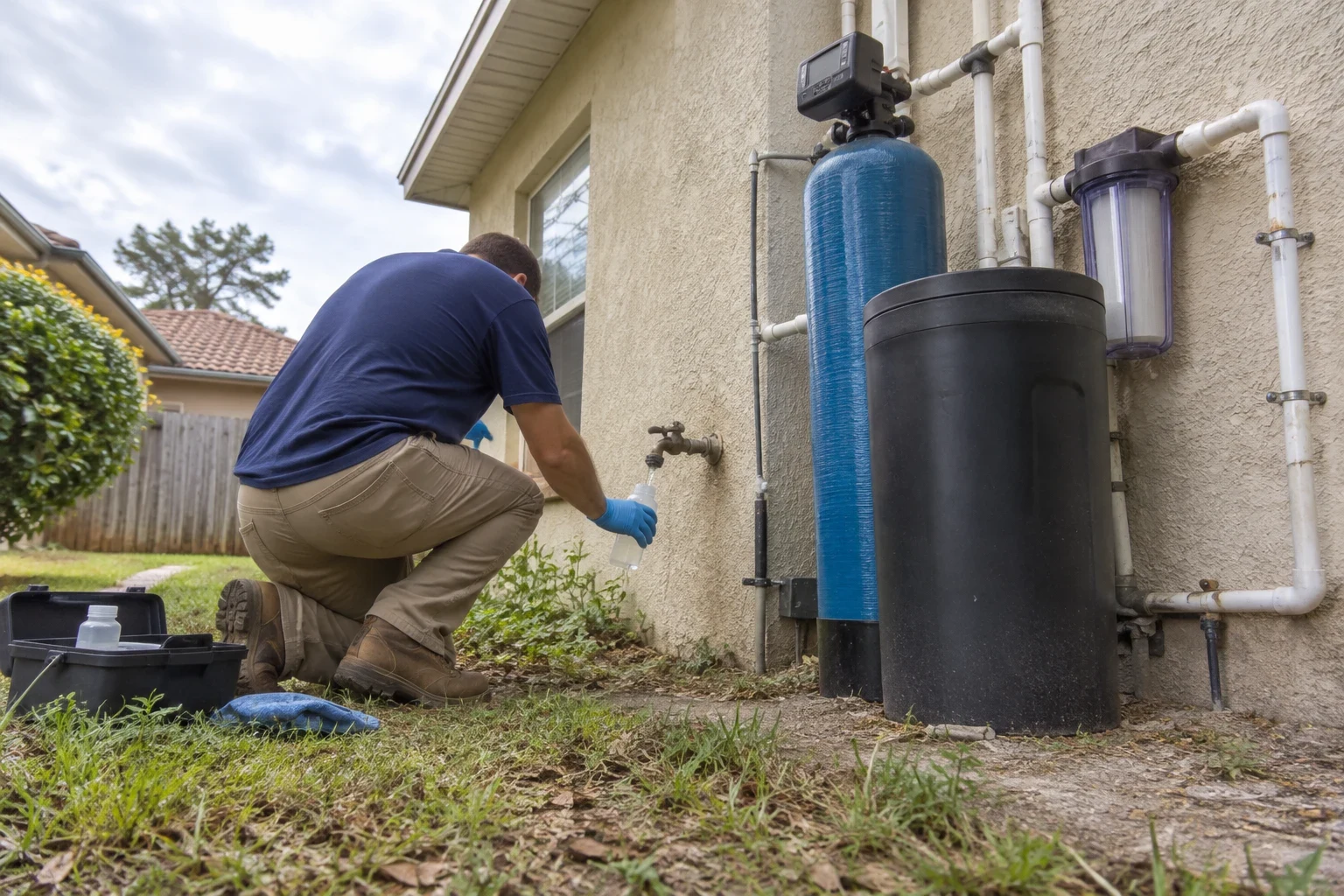
During the visit we check the pressure tank, the line where water enters your home and the space available for new equipment. We also see whether a drain and an electrical outlet are nearby, since both affect the design and the price.
- 3
A written estimate with running costs
Every line of the estimate is listed out. Beside the install price you will find yearly costs such as media, salt and filter changes, so you can see what each choice really costs to own.
- 4
Installation day
We shut off the water, mount the equipment after the pressure tank and fit a bypass valve so the system can be isolated later. Then we run the drain line, set the backwash timing, flush the system and clean up the work area before we go.
- 5
Support once the system is running
Before leaving, we walk you through the settings and the few things worth watching. After that, you have ongoing customer support for maintenance, filter replacements, and service needs whenever the system calls for it.
What sets the price of well water treatment
Neighboring wells can call for very different equipment, so we price your job once we know your water and the space we are working in. We also lay out running costs, because media, salt and service visits add up quietly over the years. That way the number you compare is the cost to own, not just the cost to install.
- The mix of problems in your water
- A sulfur odor on its own can be handled with a single filter. When iron and hardness show up alongside it, you need more stages, and each one adds to the install and to yearly care.
- How much water your home uses
- More people, more bathrooms or irrigation running off the same well all mean the equipment has to move more water without pressure sagging. A tank that is too small works harder and wears out sooner, which costs you more down the road.
- Drain, power and room to work
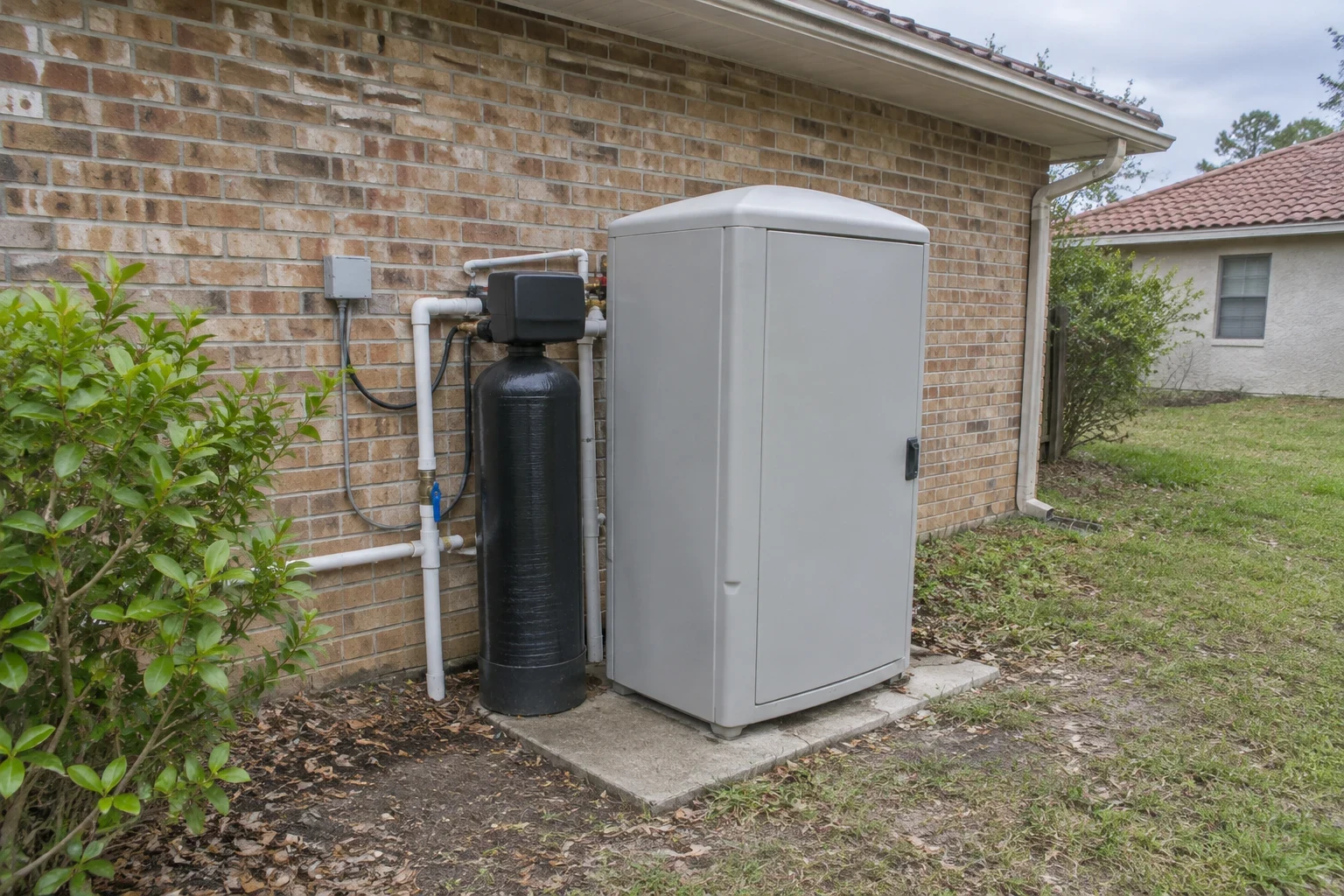
- Filters that backwash need a place to send that water, and many need an outlet nearby. If your equipment spot has neither, extra plumbing or electrical work goes into the estimate.
- Yearly care over the system's life
- Air-based filters mostly need media swapped out every several years. Systems that rely on chemical feed or salt carry an ongoing bill. We put both side by side so a lower sticker price does not hide a bigger yearly expense.
Well water treatment questions
Something not covered here? (813) 755-1194
Will a treatment system lower my water pressure?
When the equipment is sized for your home, you should not notice a difference at the tap. Weak pressure after an install usually means the unit is too small or a filter is overdue for service. We match the system to your household's flow so showers and appliances keep running the way they did before.
Do I need a water softener too?
Not always. If you see scale on fixtures and inside the water heater, a softener can help, but plenty of wells do without one. When it does make sense, we install it after the iron and sulfur stages, which keeps the resin working longer.
How much upkeep does well treatment need?
It depends on the equipment. Air-based iron and sulfur filters mostly look after themselves, needing fresh media every several years. Softeners use salt, and sediment filters need cartridge changes. You see the full upkeep schedule before you decide, and if you would rather hand that work off, we offer water softener repair and maintenance as well.
Can you work with the equipment I already have?
Often, yes. If your current filter or softener is in good shape, we can keep it and add only the stage that is missing. If it is worn out or installed in the wrong order, we will explain why replacing it costs less over the years.
Will this fix the smell in my hot water only?
A whole-home sulfur filter treats the water before it reaches the water heater, so hot and cold taps both tend to clear up. If the odor appears only on the hot side, the heater's anode rod may be involved, and we will tell you if that looks likely.
Find the well setup that pays off
Tell us what your water is doing, and we will lay out options with their up-front and yearly costs side by side. You decide with the full picture in front of you.